Orders, routings, tasks, and intended schedules are captured in ERP, MES, spreadsheets, or paper tickets.
You do not onlyneed a Plan — Youneed a Plan thatsurvives Reality
Just-In-Time Production Planning for Manufacturing Based on Trustable & Verifiable Symbolic AI
1000+
Tasks scheduled
< 30s
Replan solve window
300+
Processes evaluated
 3 min overview
99%less scheduling time
90–99%faster rescheduling
80–100%less manager coordination
15–35%higher workforce utilization
20–50%faster task completion
40–80%less idle waiting time
€10k–€60k+saved per site per year
99%less scheduling time
90–99%faster rescheduling
80–100%less manager coordination
15–35%higher workforce utilization
20–50%faster task completion
40–80%less idle waiting time
€10k–€60k+saved per site per year
The coordination gap
ERP and MES record the plan. Live coordination still happens by hand.
The missing piece is not another record system, but a layer that can reason over tasks, resources, time, and disruptions.
New orderStaff offlineMachine waitingDelay reportedPriority changedNew event
People, tools, machines, timing, and priorities move while execution is already underway.
How Yordando works
Standardize the work. Replan execution in real time.
A shared constraint model lets the system recompute assignments instead of rebuilding the schedule by hand.
Standardized inputs
TasksSkillsToolsMachinesAvailability windowsDisruptions
Constraint reasoning engine
Finds feasible assignments after each change.
Executable assignments
Who does whatWhen it happensWhich resources are usedWhat to dispatch next
300+ workflows evaluated; 1000+ tasks solved inside 30 seconds.
Task and Constraint Standardization
Turn work into tasks, dependencies, resources, and time windows.
Real-Time Replanning
Recompute only what needs to move when conditions change.
Traceable Coordination
Show why each assignment changed.
Standardize - Reason - Dispatch
From static plan to live dispatch
The scheduler reasons over constraints; the receiver puts the next task in each worker or endpoint's hands.
Scheduler workspace
YNode receiver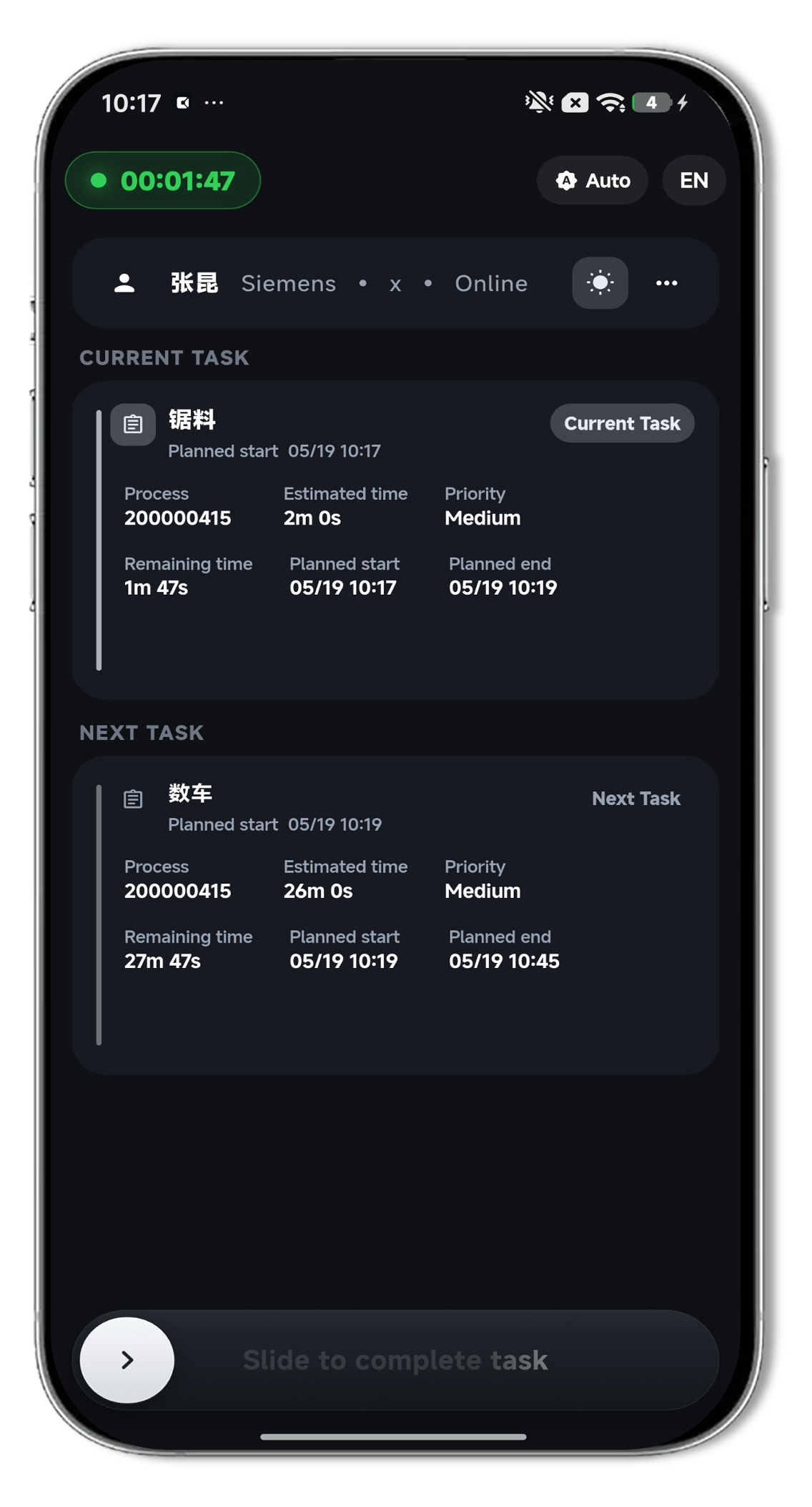
01Model tasks, resources, and time windows
02Return the next feasible assignment after change
03Feed execution status back into the same model
Execution endpoints
Return the next task to every execution endpoint
People, stations, machines, tools, robots, and AI agents receive work only after the task graph says it is feasible.
After standardizing the task graph, efficiency comes from reducing coordination waste and infeasible assignments, not from pushing people harder.
Real-time return layer
Recomputes assignments from tasks, constraints, and live status.
Peopleskills, availability, progress
Machinescapacity, downtime, time windows
Toolsshared resources, setup state
Workstationsscreens, cells, device endpoints
Robotsautomated execution cells
AI agentssoftware execution tasks
Pilot access
Start with one live workflow
Verify whether real-time return can reduce manual coordination after change.
Pilot packages
Pilot package availability
Pilot builds open after the workflow and deployment scope are configured.
Yordando Scheduler
Model constraints, run schedules, and track execution recovery.
Coming soonYNode (Android)
Task receiver for staff members, workstation screens, and field execution points.
Coming soonYordando is in pilot rollout. Package access opens with a configured pilot environment.
Development Project of Yordando Solution Based on Artificial Intelligence for the Optimization of Restaurant Kitchen Work


Project details
UAB "Yordando" is implementing the project "Development project of Yordando solution based on artificial intelligence for optimization of restaurant kitchen work" no. 02-018-K-0534 , which aims to create an AI-based Yordando solution for optimizing restaurant kitchen work.
UAB "Yordando" is a Vilnius-based startup building real-time reasoning technology for operational coordination. The EU-funded restaurant kitchen project is the company's first applied field: Yordando automatically assigns cooking tasks to kitchen staff, helps teams serve timely and high-quality dishes, and replaces paper-ticket FIFO recovery with constraint-driven task coordination.
The same reasoning structure is designed to extend to industrial production, maintenance, and service workflows where people, tools, machines, timing, and disruptions must be coordinated in real time.
The project is implemented by the 2022-2030 Ministry of Economy and Innovation of the Republic of Lithuania economic transformation and competitiveness development program progress measure "Encouraging companies to digitalize" activity "Financial incentives for startups and young companies to create AI, blockchain technologies, robotics process automation products, and solutions"
- The total value of the project is EUR 132,615.00.
- Funding for the economic revitalization and resilience enhancement measures project - EUR 102,000.00.
- The applicant's funds - EUR 30,615.00.
- The beginning of the implementation of the project - 2023. November 8, end - 2024 December 31